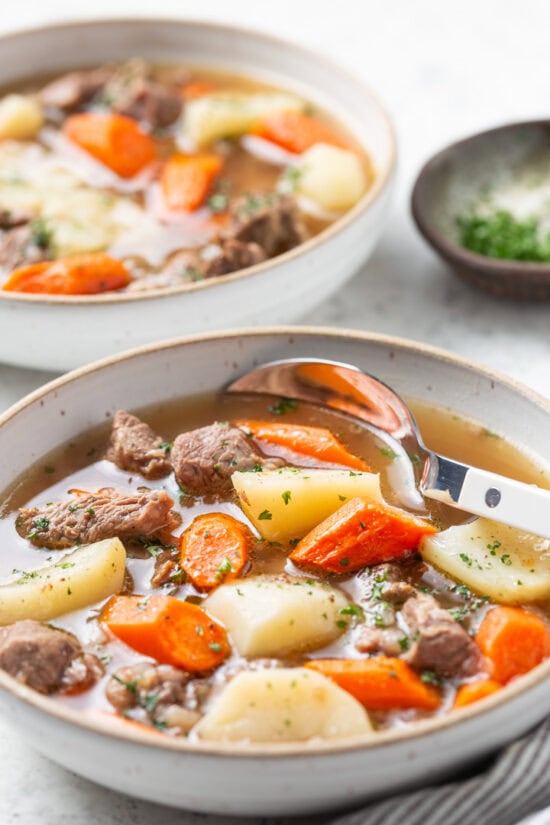
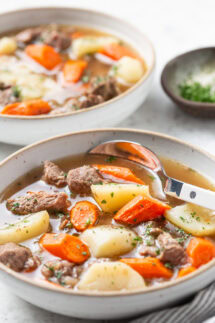
This Irish Stew is a simple, comforting dish that stays true to the traditional recipe. Made with tender lamb shoulder, hearty potatoes, and onions, it’s slow-simmered until rich and flavorful. With just a handful of classic ingredients, this timeless stew is rustic, satisfying, and perfect for a cozy meal that can be cooked in the oven or in a pressure cooker.
This post contains affiliate links
ingredients you’ll need to make this recipe
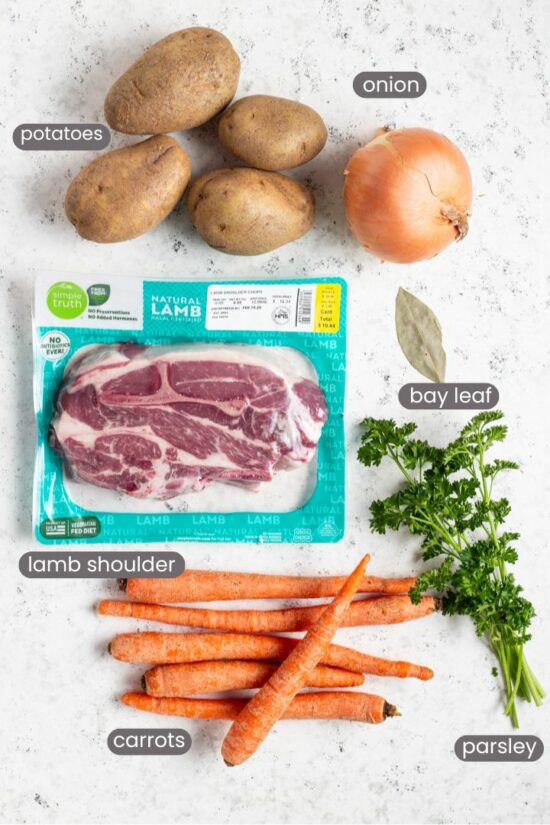
- Lamb – The traditional cuts of lamb used for classic Irish stew are neck, bone in shoulder, or shank. I used bone-in lamb shoulder chops as they are readily available where I live and cheaper than other cuts. They work better than boneless shoulder because the bones create a richer, more flavorful broth as the stew cooks. If using boneless lamb, I recommend using chicken stock instead of water to add extra depth of flavor.
- Potatoes – Potatoes are one of the classic ingredients in traditional Irish stew. I used Russet potatoes, a fluffy, high-starch variety that helps naturally thicken the stew, especially if you mash a few pieces into the broth as it cooks.
- Onion – forms the aromatic base of the stew and adds savory depth as it slowly cooks with the lamb.
- Carrots – add a touch of natural sweetness and color that balances the rich lamb broth
- Bay Leaf – perhaps not a classic ingredient but it adds a subtle flavor to the stew
- Fresh Parsley – entirely optional but it adds a little pop of color and fresh flavor to the finished stew.
why this recipe works
This Irish stew follows a traditional method using lamb shoulder, one of the best cuts for slow cooking. As the stew gently cooks, the lamb becomes tender while releasing rich flavor into the broth. If you are using lamb shoulder chops, keeping the bones in the pot adds even more depth to the stew as it cooks.
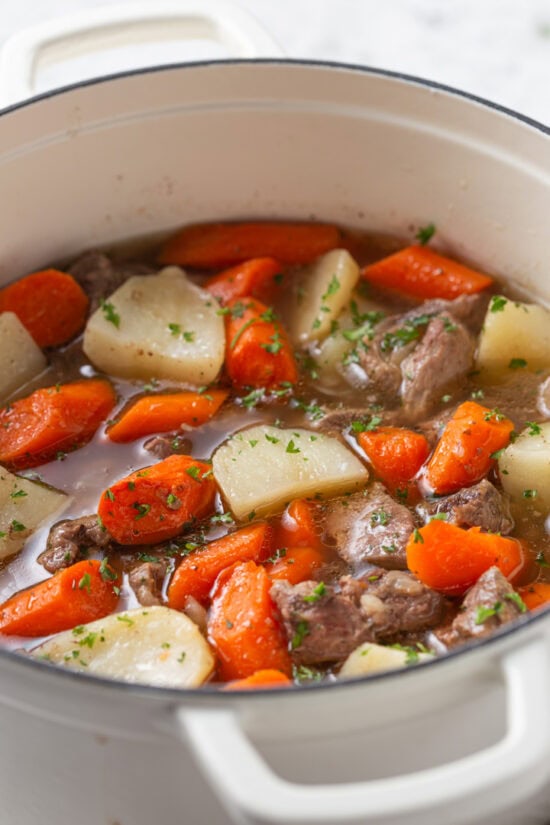
The vegetables are layered into the Dutch oven so they cook evenly during the long oven simmer. Potatoes placed at the bottom of the pot help naturally thicken the broth slightly, while the carrots and onions add subtle sweetness. With only a few simple ingredients and light seasoning, this classic Irish stew allows the natural flavor of the lamb to remain the focus.
recipe FAQ’s and tips
- Can Irish stew be made in advance? Yes. Like most stews, the flavor improves after sitting for a day. Refrigerating it overnight also makes it easier to skim off any fat that rises to the top.
- What cut of lamb is best for Irish stew? Bone-in cuts like lamb shoulder, neck, or shanks work best because they become very tender after a long simmer and the bones add flavor to the broth. These tougher cuts were traditionally used in Irish stew because they soften beautifully when cooked low and slow.
- Can I use beef instead of lamb? You won’t get great results if you simply substitute boneless beef for lamb in this recipe as lamb (or historically mutton) is what makes this a traditional Irish stew. If you prefer to cook a beef stew I recommend trying my slow cooker beef stew recipe instead.
- Why do the potatoes thicken the stew? Some of the potatoes break down as the stew cooks, naturally thickening the broth without needing flour or other thickeners. This is one reason starchy potatoes work well in this recipe
More Recipes You’ll Enjoy
- Slow Cooker Beef Stew
- Beef and Butternut Squash Stew
- Hungarian Ghoulash
- Barbacoa Beef
- Sheet Pan Shrimp Fajitas
- Egg Roll in a Bowl
Irish Stew
a classic dish made with healthy fresh ingredients.
Ingredients
- 3.5 lb lamb shoulder chops or boneless lamb shoulder , or 2.5lb boneless lamb shoulder
- 2 tbsp olive oil
- 1 large onion , 0.6lb
- 8 large carrots , 1lb
- 1 lb russet potatoes
- water , or chicken stock if using boneless lamb
- 1 bay leaf
- 1 tsp salt
- 1/2 tsp white pepper
garnish
- 1 tbsp parsley , finely chopped
Instructions
-
Preheat the oven to 350°F
-
Cut boneless lamb shoulder into 1½-inch cubes. If using lamb shoulder chops, you can leave them whole or remove the meat from the bones as shown in the photos above. Be sure to keep the bones as they will add flavor to the stew.
-
Heat the oil in a large Dutch Oven over a medium heat. Add the onions and cook until soft but not browned, then remove them from the pot.
-
Fill a large bowl with water. Peel the potatoes and cut them into even pieces, about the size of a medium baby potato. Place them in the water to prevent browning.
-
Slice about four of the potato pieces into thick slices and layer them on the bottom of the Dutch oven. Add the cooked onions, lamb pieces, lamb bones (if using), bay leaf, salt, pepper, and 2 cups (500 ml) of water. If using boneless lamb, use chicken stock instead.
-
Bring to a simmer, cover with the lid, and transfer to the oven. Cook on the center rack for 90 minutes.
-
While the stew cooks, peel and cut the carrots into 2-inch chunks. After 90 minutes, remove the pot from the oven, drain the potatoes, and add them along with the carrots. Cover and return to the oven for 30 minutes more.
-
Strain the stock from the stew and skim off the excess fat. Alternatively, refrigerate the stew overnight and remove the solidified fat the next day.
-
Serve garnished with chopped parsley (optional).
Pressure Cooker instructions
-
Prepare the lamb, potatoes, and carrots as described above.
-
Turn on the sauté function (medium heat). Add the olive oil and cook the onions until soft but not browned, then turn off the sauté function.
-
Add the sliced potatoes, bay leaf, salt, pepper, and 2 cups water (or chicken broth if using boneless lamb) to the inner pot along with the lamb.
-
Lock the lid and set the steam valve to sealing. Cook on high pressure for 10 minutes using the Manual or Pressure Cook setting. When the time is up, allow 12 minutes natural release, then release the remaining pressure and open the lid.
-
Add the carrots and remaining potatoes. Replace the lid and cook on high pressure for 5 minutes. When finished, quick release the pressure and open the lid.
-
Follow the instructions above for removing excess fat and serving.
Recipe Notes
Lamb – Bone-in cuts work best as the bones add flavor to the broth. Look for shoulder, neck, or shanks. I often use lamb shoulder chops because they are usually less expensive than other cuts and can be cooked whole if you prefer not to cut the meat into cubes.
Potatoes – I used Russet potatoes because their high starch content makes them light and fluffy and helps naturally thicken the stew if some of the potatoes are mashed during cooking. You can use any potatoes you like, but waxy varieties will not break down and thicken the stew as easily.


Leave a Comment